Technical Writing as a Career in the Age of AI
An honest look at technical writing as a career, its growth, and what AI really changes.
If there’s one thing that unites the technical writing community, it’s how we all got here. For most of us, it was accidental, and this holds true for sure before the 2020s. It’s not an exaggeration to say that many people realized they were technical writers only after working in the field for years. I am one such person.
But now things have changed, and many colleges teach it as a subject. But the question remains: what is this profession like? Who is it for? What’s professional growth like? Will this career exist in this era of AI? I do not think anyone could provide a 100% foolproof answer to this; but pointers that help one take a decision are possible. The article aims to assist freshers preparing for placement or starting their careers.
What’s this profession like?
The role of a technical writer is to make a feature or procedure easier to understand through added context and simplified language. And these roles are required in all industries. 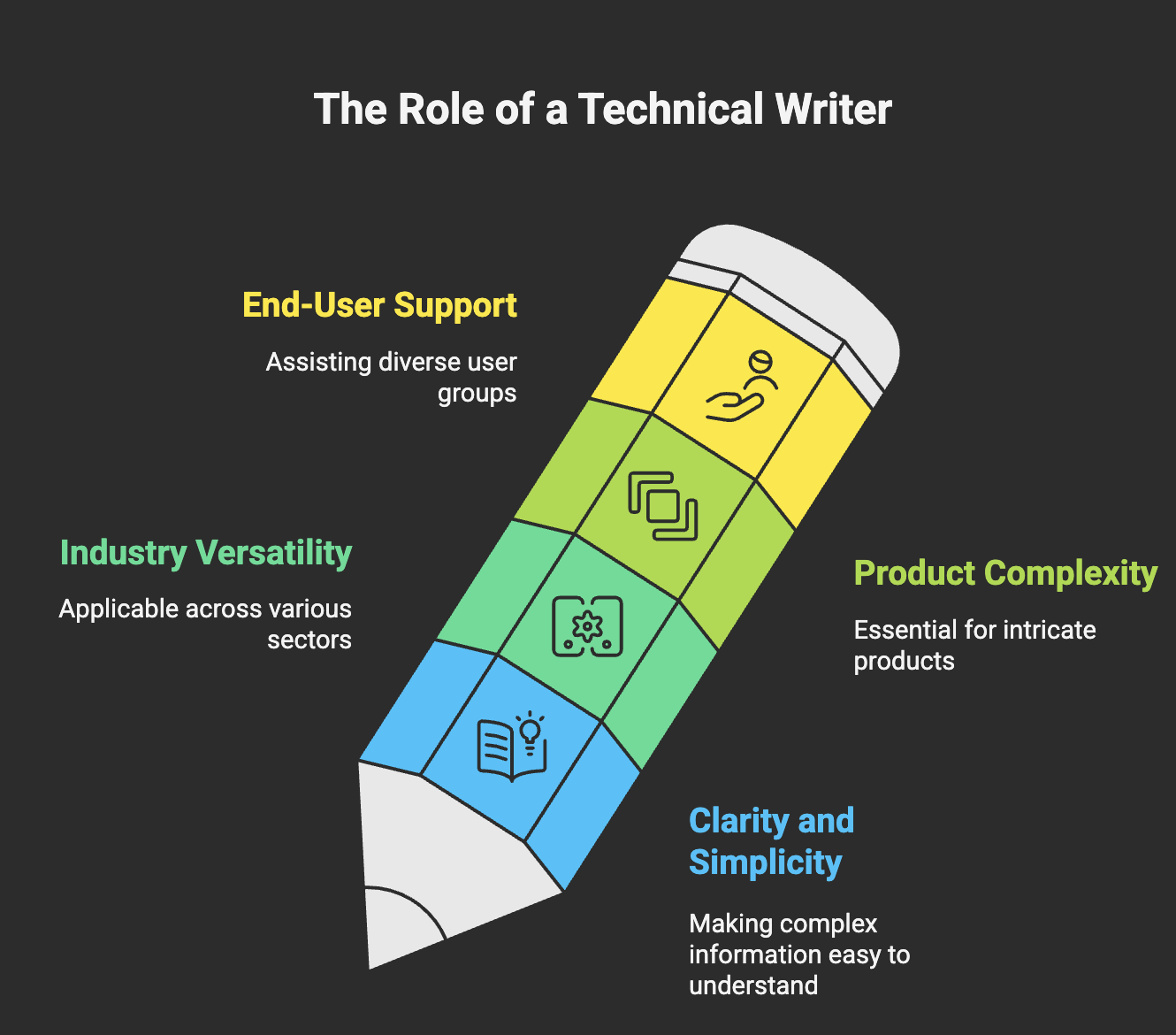
For example, airlines, hardware, electrical, semiconductor, IT, electrical, electronics and the rest. In the aircraft industry, the features and the procedural steps are around the aircraft components and functionality. In the electrical industry, it can explain any specific electrical device and how to operate those. For the IT industry, it can be a document explaining software use.
The more complicated the product is, the greater the requirement for a technical writer. The writer is the person who removes the complication around the product and makes it simple for the end user. End users can also be a support team within the company, configuring software for a client, end customer, or acting as a source of truth.
Will this career exist in this era of AI?
Now, the question is whether this profession is valid in the era of AI. I would be lying if I responded to this question with a no. Let’s consider this in a couple of scenarios:
A company that has a very simple product, such as a basic video editor.
Technical writer requirement – No. Here, since the product is a basic video editor, the end user won’t look for a user guide. If something specific needs to be conveyed to the end user, the UI itself can convey it, or the developer can create a simple guide using AI tools. There are AI tools that generate guides from a demo video in which someone explains the functionalities and shows the editor.
A company has weather monitoring devices in various cities and offers a free API for anyone to access weather data. Suppose you’re a developer and have a website, and you wish to show the local weather. In that case, you can use that API to display the weather information on your website. However, the developer needs to understand how to use the API, including the supported parameters and authentication requirements. A guide explaining these things should be available.
Technical writers not needed. Because there is just one API, and it’s not complex. The API developer could use an AI tool to create a guide, feeding it with the API’s curl requests and received responses.
A company that manufactures various electrical devices that help to save electricity when running big motors in a manufacturing industry.
Technical writer required: Yes. Since the product is complex and the machine may need specific configurations during installation, a guide should help the configuration person. This guide can be a big one depending upon the product. A developer might not have control over the language and time to create this guide and manage it. Hence, a team of technical writers is required to do this job.
A company that provides payment support for e-commerce websites across the world. Example: Razorpay, Payu, PayPal, etc.
Technical writer required: Yes. Here, the developer who integrates the payment service provider’s APIs needs guidance on how to use them. AI can create API guides, but API developers would have more to manage. They may also simply struggle to convey API functionality.
In the scenarios needing technical writers, they must use AI efficiently and focus on context and use-case scenarios.
What’s professional growth like?
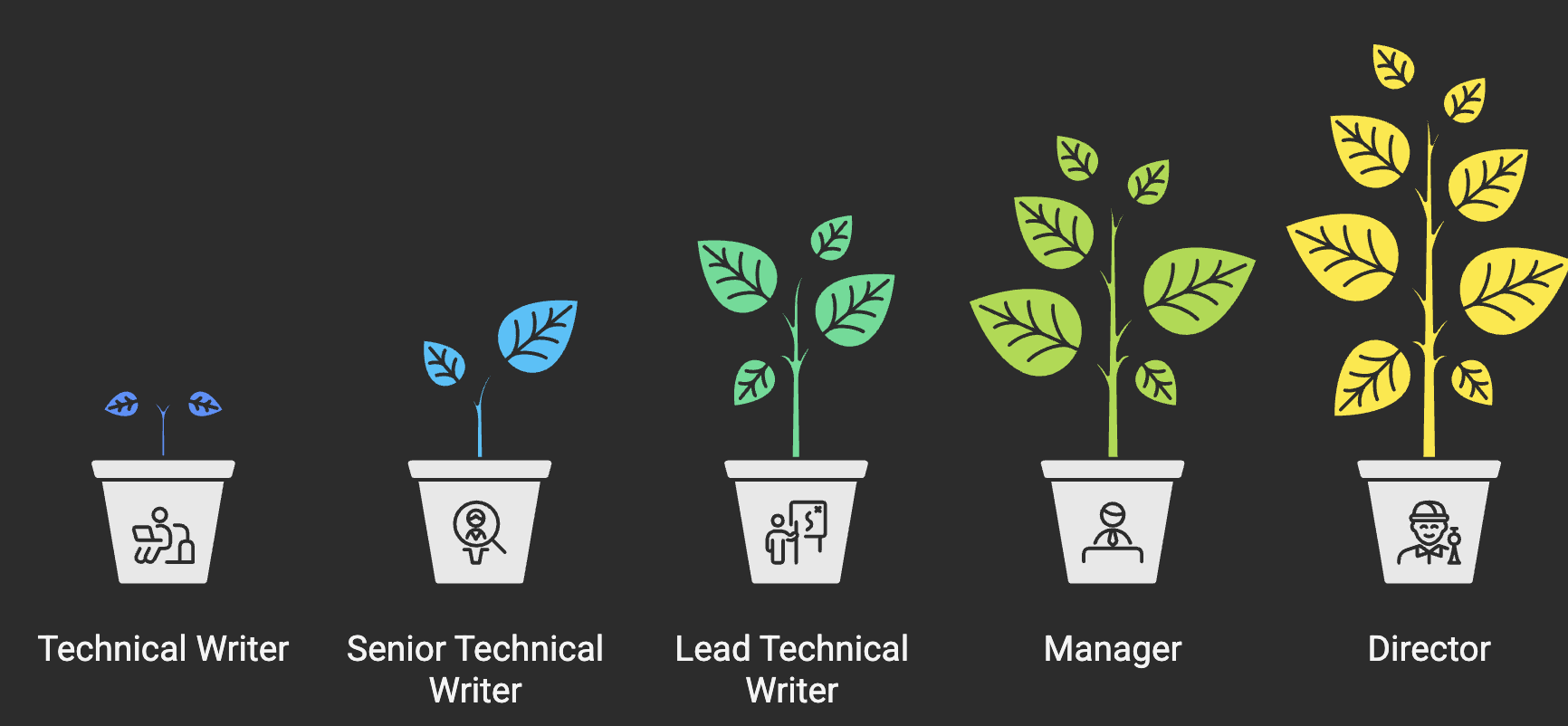
Technical Writer → Senior Technical Writer → Lead Technical Writer → Manager → Director role is what I have seen. This also depends on the company size.
Some companies will just have one writer, and that person will play the role of an individual contributor.
A good technical writer over years in a company will develop a deep understanding of the product and organisations make use of that by assigning them various other roles. I term it a natural growth that happens when you stay for a longer term with the support of the organisation.
Who is it for?
As many institutes claim it, this is not a relaxing job role or a profession ideal post a career-break. Yes, in hardware-based companies or some MNCs, there are technical writers assigned copy-paste jobs. In the era of AI, no one needs such writers.
Individuals interested in technical products, curious to learn, and able to communicate clearly would be a good fit. His or her core ability lies in hiding the complexities of the product using words.
Salary
As per the survey conducted by various technical writing communities, salaries for freshers are around 4.30, which is wrong. In product companies, the fresher salaries range from 7 to 12 LPA or even more. The highest reported salary as per the survey is around 75 LPA. But I know someone who was earning more than that 5 years before. But the fact is that it all depends on the company you are in. Below are the salary survey details from the STC and Techwriter’s tribe.
Future outlook
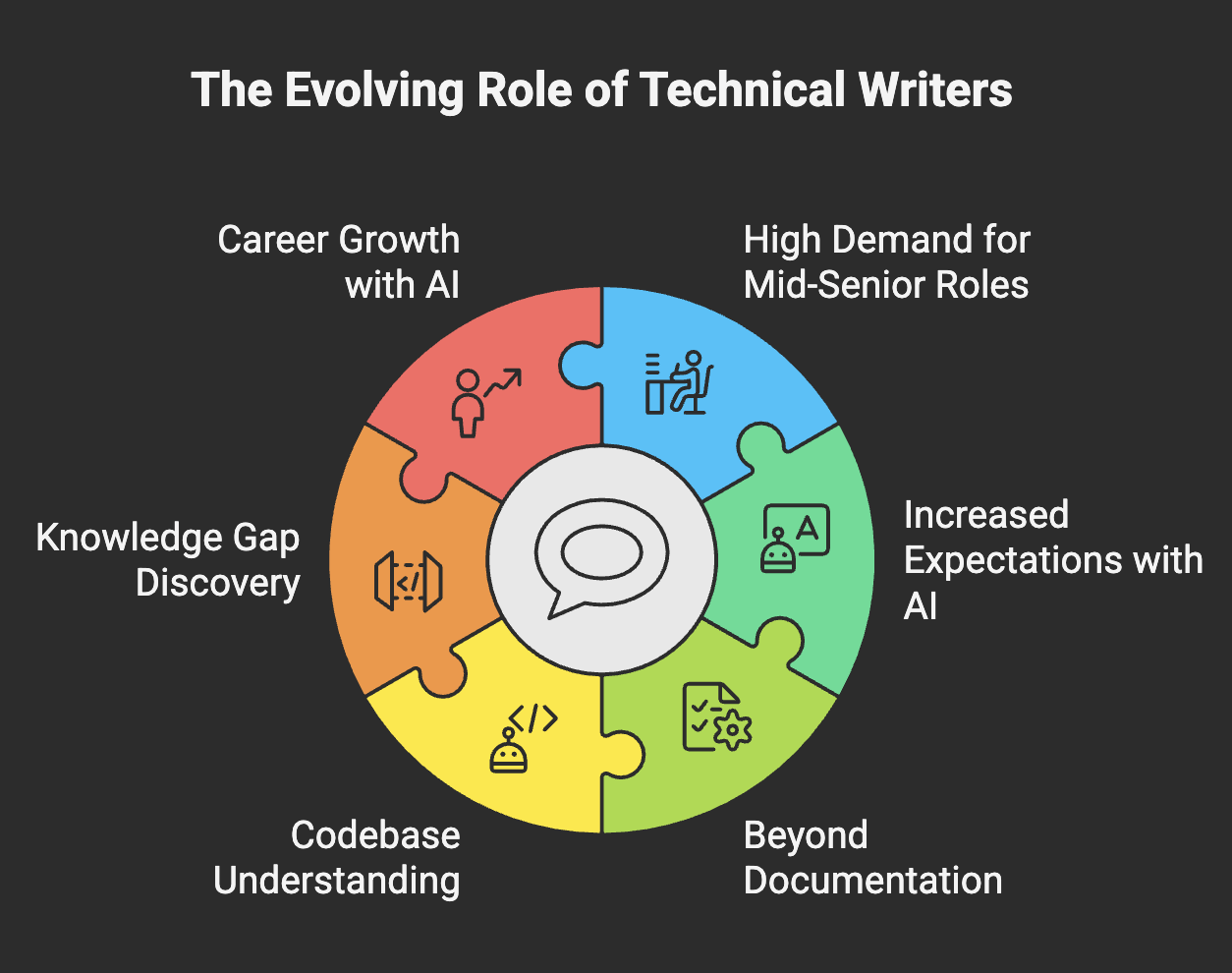
As per the job posting in job-listing portals, the demand is high for mid-senior roles. 6–7 years of experience. But this is the case for most roles.
Demand for technical writers in general would increase, but with AI the expectation would be more. Expectations from a junior writer would never be the same as before.
Your contributions should never stop at just getting things documented. You will be expected to look at the code base and understand how the functionality is supposed to behave. AI makes this possible.
Knowledge gaps will be easier to identify, increasing the need for documentation.
Overall, the future is challenging, but you are more powerful now. Your career growth will depend on how well you use these AI superpowers.